Problems With Delivering a Baby Cause a Neurologic Disorder
What is a Neurologic Disorder?
The term "neurologic disorder" applies to any condition that is caused past a dysfunction in office of the encephalon or nervous organization, resulting in physical and/or psychological symptoms.
The development of the human brain begins during pregnancy and continues through infancy, childhood and adolescence. Near brain cells are formed before birth but the trillions of connections between these nervus cells (neurons) are not developed until infancy.
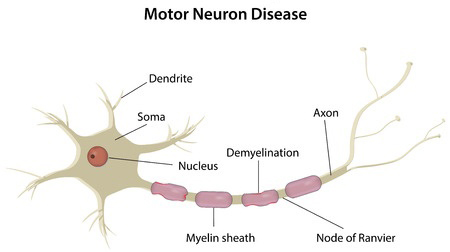
Diagram of a motor neuron
The encephalon is composed of gray affair (neurons and interconnections) and white matter (axons surrounded past a myelin sheath). A motor neuron (above) carries impulses abroad from the brain.
The encephalon is cocky-organizing. It selects information to forrad its growth and development. It also adapts to the environment. Experience of the environment through the senses of touch, smell, sight, taste and hearing produces connections in the brain.
All neurologic disorders involve the brain, spinal column or fretfulness. Symptoms depend on where damage occurs. Areas that command movement, communication, vision, hearing or thinking can exist affected.
Neurologic disorders are broad ranging. They have various causes, complications and outcomes. Many result in boosted needs requiring life-long management.
Symptoms of neurologic disorders vary. Physical, cerebral (or thinking), emotional and behavioral symptoms may be present, with specific disorders having combinations or clusters of these symptoms. For example, cognitive palsy tends to have more physical symptoms whereas ADHD tends to have greater effects on behavior.
Many neurologic disorders emerge during the early years of development and may be diagnosed at nascency. Some are diagnosed afterwards considering symptoms only appear when:
- A kid misses developmental milestones or has developmental difficulties (e.g. autism).
- A damaging infection occurs (east.g. meningitis).
- An accident causes encephalon injury (stroke, trauma, hypoxia).
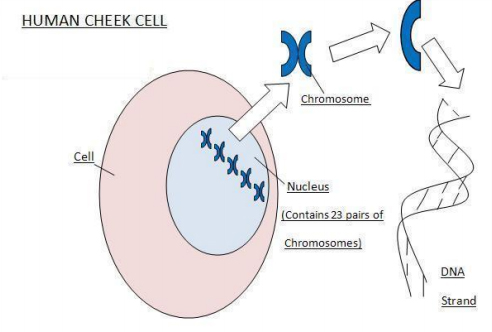
Diagram showing human prison cell and chromosomes
Causes of Neurologic Disorders
Many neurologic disorders are "congenital," meaning they were nowadays at birth. But some of the disorders are "caused," which signifies that they adult afterward birth. Those with an unknown crusade are termed "idiopathic."
Congenital Causes (present at birth)
Genetic factors can influence the evolution of a variety of neurologic disorders that are typically inherited from parents through genes and chromosomes.
Chromosomes are long strands of DNA supported past protein that are found in the nuclei of human being cells.
Sections of DNA called genes carry the chemical code which makes us who we are. Chromosomes are composed of thousands of genes.
A human body jail cell normally contains 46 (23 pairs) of chromosomes, half inherited from the mother and half from the begetter.
- Gene abnormalities
Genes are responsible for determining characteristics. Changes in genes (chosen mutations) therefore change characteristics. Some mutations crusade abnormalities that are damaging to individuals (for example, cystic fibrosis). Mutations can be passed on to offspring affecting their characteristics. - Chromosome abnormalities
Changes in chromosomes, whether in number or in construction, have big effects on characteristics because they contain large numbers of genes. - Modify in chromosome number
The term monosomy refers to a loss of one chromosome out of a pair (for example, Turner syndrome). In trisomy, an extra chromosome has been gained by a pair (for example, Downward syndrome). - Change in chromosome structure
Microdeletions result in a loss of genes (fragments of DNA) from a chromosome. Microduplications occur when genes (fragments of Dna) are gained. Examples of such genetic conditions include cri-du-chat, Prader-Willi, and Angelman syndromes. - Metabolic disorders
Metabolism refers to the chemical processes that occur in the body. Metabolic disorders can crusade lasting impairment and must be identified every bit early equally possible (for example, through blood or urine tests). Examples of metabolic disorders include phenylketonuria (PKU) and homocystinuria. PKU is an inherited disorder where phenylalanine (present in food) tin can reach high concentration in claret serum. This causes damage to encephalon cells and to intellectual ability. Many metabolic disorders are detected at nascency every bit claret samples are sent for 'universal newborn screening'. In the United states of america, each country has its own guidelines as to what screening testing is washed and non all countries have such screening programs - Congenital malformation
Built 'defects' are believed to be the result of complex interactions betwixt genes, environment and behaviors. An case is tuberous sclerosis, a condition where children have growths in regions such equally the encephalon, heart, eyes, skin, kidneys and lungs. They may also experience epilepsy, learning difficulties/impairments and autism.
Pre/perinatal Causes
- Toxins and ecology factors
Neurotoxins tin enter and harm a kid'southward developing system through the placenta during fetal development. Consequently a child may develop intellectual and behavioral problems. Neurotoxins include alcohol (linked to fetal alcohol syndrome), lead (linked to intelligence, learning and memory bug), mercury (linked to learning and development disorders), tobacco (linked to challenging behaviors and developmental impairments) and some food additives (linked to higher rates of ADHD in children). - Nutritional deficiencies
Nutrients are needed for growth. A deficiency of nutrients during the concluding three months of pregnancy can subtract the number of brain cells. A deficiency of folic acid (a B vitamin) could lead to a neural tube defect (NTD)—for example, spina bifida (open up spine). - Infections
TORCH infections, including sexually transmitted infections, can be passed from mother to baby during pregnancy. As reflected by the letters in the name, TORCH infections include Toxoplasmosis, Other infections (hepatitis B, syphilis, varicella-Zoster virus, HIV and Parovirus B19), Rubella, Cytomegalovirus and Herpes simplex virus. These infections can cause developmental abnormalities in the unborn child. Chorioamnionitis tin be a cause of cerebral palsy. - Hypoxia/asphyxia
Perinatal asphyxia is the condition resulting from a lack of oxygen (hypoxia). Hypoxic ischemia is insufficient claret flow causing reduced claret oxygen content. If a developing baby in the uterus does not have enough oxygen then it may have hypoxic ischemic encephalopathy (neurologic damage caused by low oxygen). The effects of severe HIE can include cerebral palsy, intellectual impairments and epilepsy. - Complications during childbirth
The protective skull is non fully formed at birth making the brain vulnerable to concrete injury. The supply of claret and oxygen from the umbilical cord can also get affected at birth. As the encephalon is dependent upon this supply of oxygen, deprivation of oxygen can crusade brain damage. - Prematurity/low birth weight
Low nativity weight may indicate growth bug in the womb and has been associated with a greater likelihood of developing cognitive impairments, speech and language impairments, attention issues, social difficulties, hyperactivity and learning impairments. Some may arise considering of associated complications during childbirth. - Interaction effects
A number of factors, including heredity, factor expression, the surroundings, communicable diseases, poor nutrition, stress, drugs and other chemicals, can interact in circuitous ways to cause some neurologic disorders.
Acquired Causes (developed after nascency)
These are less common than congenital causes of neurologic disorders, and include:
- Immune disorders
Allowed disorder, such as autoimmune encephalitis, can cause emotional challenges, abnormal trunk movements and seizures. Children with such issues can develop symptoms over several months and the diagnosis is challenging and frequently involves assay of blood and cerebrospinal fluid. - Postnatal infections
- Encephalitis (inflammation of the brain) can be caused past many types of infection (usually viral). Some children may develop neurologic long-term consequences following encephalitis, including memory problems, behavioral changes, speech impairments, and epilepsy.
- Meningitis is caused by a bacterial or viral infection that inflames the meninges (membranes surrounding the encephalon and spinal cord). The inflammation and swelling tin can harm the brain and nerves. Complications are more probable following bacterial meningitis than with viral meningitis. Lasting symptoms include hearing impairments, memory difficulties, coordination and residual problems, learning impairments, epilepsy, cerebral palsy, speech impairments, and loss of vision.
- Traumatic encephalon injury
This occurs when trauma to the head results in harm to the brain. There are three principal types of traumatic brain injury (TBI):
- Airtight head injuries – where no damage is visible; these are common in car accidents.
- Open wounds – where the brain is exposed and damaged by an object.
- Burdensome injuries– where the head is crushed and brain harm occurs.
Evidence suggests that children'due south brains are susceptible to lasting impairment from TBI due to a disruption of the nervous system during development.
- Spinal cord injuries
Motorcar accidents, falls, or sports accidents can cause spinal cord injuries. The caste of damage depends on where the harm occurs and what part of the body the injured spinal expanse controls. Spinal injuries can lead to loss of muscle part. - Neoplasm
Tumour is an abnormal mass of tissue producing tumors. Tumors tin develop in the brain or spinal cord. They can be beneficial (noncancerous) or malignant (malignant). Cancerous tumors are the virtually dangerous, so early diagnosis is very important. Benign tumors can have neurologic consequences as they increment pressure on other parts of the brain, damaging salubrious tissue. Symptoms include seizures, limb weakness, difficulty walking, speech impairments and swallowing difficulties, foreign sensations, learning impairments, challenging behaviors, or vision and hearing impairments. - Toxins
Exposure to ecology chemicals or toxins during childhood can lead to neurologic impairment. Closed head injuries – where no damage is visible; these are common in car accidents.
Additional Resources
Living with a Neurologic Condition | What is a Kid Neurologist? | Preparing for Your Medico's Visit |
Searching for a Diagnosis | Support for Patients & Caregivers
Source: https://www.childneurologyfoundation.org/what-is-a-neurologic-disorder/

Post a Comment for "Problems With Delivering a Baby Cause a Neurologic Disorder"